Evaluating Candy Bubble: A Practical Guide to Retro Groovy Typography
Understanding the Core Aesthetic
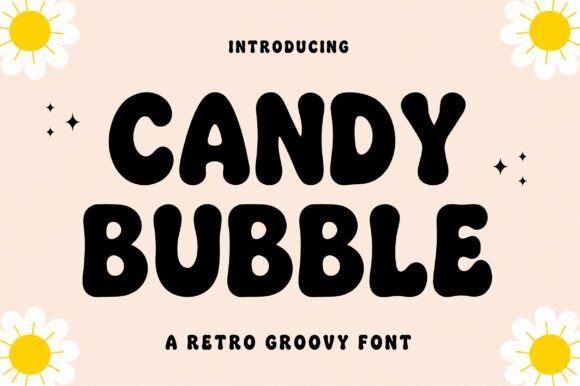
In the landscape of display typography, the "retro groovy" category often risks looking dated or overly niche. However, Candy Bubble positions itself distinctly by merging a playful, bubble-style structure with a vintage vibe that feels more nostalgic than obsolete. It is not merely a rounded font; it is a typeface characterized by bold, chunky letterforms that suggest dimension and weight. For designers evaluating options in this category, the primary distinction lies in its specific blend of 1970s inspiration and modern legibility. Unlike standard sans-serifs that prioritize neutrality, this font is designed to carry the entire mood of a project. It creates an immediate atmosphere of cheerfulness, making it a strong contender for projects where the primary goal is emotional engagement rather than corporate seriousness.
The Anatomy of the Lettering
When comparing Candy Bubble to other whimsical or playful fonts, the "smooth chunky look" is a key differentiator. Many retro fonts rely on distressed textures or sharp, psychedelic edges to convey their era. In contrast, Candy Bubble opts for softness. The letterforms appear inflated, creating a tactile quality that works exceptionally well in physical applications. This smoothness is vital for modern production methods. While a textured retro font might break up or look messy when scaled down for small stickers, the solid, bold construction of Candy Bubble maintains integrity across various sizes. It offers the energy of the past with the clean vector precision required for contemporary digital and print workflows.
Practical Application: Where It Fits and Where It Doesn't
Choosing a typeface is rarely about finding the "best" font in a vacuum; it is about finding the right tool for the specific job. Candy Bubble shines in environments where the design needs to grab attention quickly and communicate a sense of fun. It is particularly effective for branding aimed at younger audiences or products that evoke childhood nostalgia, such as confectionery packaging or toy branding. Furthermore, its inclusion of uppercase, lowercase, numbers, and special characters makes it versatile enough for full sentences, though it is generally best suited for headlines and display text rather than long-form reading.
- Kids' Designs and Educational Materials: The rounded edges and friendly demeanor make it safe and appealing for children's content.
- Cricut and Vinyl Cutting: Because of its bold, connected appearance and lack of ultra-thin strokes, it cuts cleanly. It is a practical choice for crafters who need a font that weeds easily.
- Social Media Graphics: On platforms like Instagram or TikTok, where scroll-stopping power is essential, the boldness of Candy Bubble ensures readability even on small mobile screens.
- Event Branding: For birthday parties, festivals, or casual pop-up shops, it provides an instant thematic anchor.
Limitations and Tradeoffs
No typeface is universal. The very characteristics that make Candy Bubble strong in display contexts also limit its utility elsewhere. It is generally unsuitable for body copy; the heavy weight and wide letterforms would create a "wall of text" that is difficult to scan. Additionally, in professional or corporate contexts—such as law firm branding or financial reports—this style would be perceived as lacking the requisite gravitas. Designers must also consider the "novelty" factor. While it is excellent for a specific campaign, using a highly stylized font like Candy Bubble for a primary brand logo can sometimes limit future rebranding flexibility if trends shift away from the retro-groovy aesthetic.
Comparison with Alternative Approaches
When researchers compare Candy Bubble to other resources, they are usually weighing it against three main categories: standard rounded sans-serifs, hand-lettered scripts, and other retro display fonts.
Against Standard Rounded Sans-Serifs: Fonts like Comfortaa or Nunito offer roundness and friendliness but lack the "groovy" personality. If a project requires a neutral, friendly look that can handle both headlines and body text, a rounded sans-serif is the superior choice. However, if the goal is to inject specific personality and vintage energy, Candy Bubble is the stronger option.
Against Hand-Lettered Scripts: Script fonts often provide a personal touch. However, they can suffer from legibility issues, especially in all-caps usage or at small sizes. Candy Bubble offers a more structured, predictable rhythm. It delivers a "crafted" feel without the readability risks associated with cursive scripts. For projects like T-shirts or stickers where quick comprehension is key, the blocky nature of bubble letters often outperforms scripts.
Against Other Retro Fonts: The market is saturated with 70s-inspired typography. Many lean heavily into the "psychedelic" look with extreme warping or distressed textures. Candy Bubble tends to be cleaner. This makes it more adaptable to modern, colorful flat designs. It acts as a bridge between the retro theme and a contemporary, vector-based aesthetic.
Decision Factors for Designers
When evaluating whether to integrate Candy Bubble into your toolkit, consider the following decision points:
- Production Method: Are you screen printing, using vinyl cutters, or purely digital? The bold weight of Candy Bubble handles high-contrast production well.
- Target Audience Age: While it appeals to kids, adults often view it through a lens of nostalgia. It works well for "adulting" products that don't take themselves too seriously, such as craft beer labels or casual apparel.
- Pairing Needs: Because Candy Bubble is so loud, it requires a very subdued partner. It pairs best with clean, geometric sans-serifs for any secondary text. If you try to pair it with another decorative font, the design will likely become chaotic.
Technical Considerations and Usability
From a technical standpoint, the usability of a display font often comes down to its character set and kerning. Candy Bubble includes a comprehensive set of glyphs, which is essential for international branding or complex phrasing. However, because bubble fonts are often geometrically uniform, automatic kerning can sometimes leave gaps between certain letter pairs (like 'T' and 'o' or 'V' and 'a'). Designers should be prepared to manually adjust tracking and kerning when using Candy Bubble in logos to ensure the "smooth" look is consistent across the entire word.
Furthermore, the "vintage vibe" relies heavily on color context. Candy Bubble often looks best when paired with a retro color palette—mustard yellows, teals, and burnt oranges—or with high-contrast, modern neon colors to emphasize the "bubble" effect. Using it in flat black on a white background can sometimes make it look less dynamic than intended. It is a font that invites creative color usage to fully realize its potential.
Summary of Strengths
For the designer or creative professional weighing their options, Candy Bubble presents a specific value proposition. It is not trying to be a workhorse font. Instead, it is a specialized tool for injecting cheer, nostalgia, and bold personality into a project. It solves the problem of needing a typeface that is both retro-inspired and legible on modern screens. While it has limitations regarding body text and formal usage, its strengths in branding, packaging, and merchandise design make it a valuable asset for anyone working in playful, consumer-facing markets.
Ultimately, the decision to use Candy Bubble should be driven by the project's tone. If the design brief calls for seriousness, minimalism, or corporate neutrality, look elsewhere. But if the goal is to create a joyful, memorable, and visually engaging experience that resonates with a sense of fun, Candy Bubble is a robust and stylistically distinct choice that stands up well against the competition.