Bombskid: Evaluating This Bold Freestyle Graffiti Font for Urban Design Projects
What Defines Bombskid's Visual Identity?
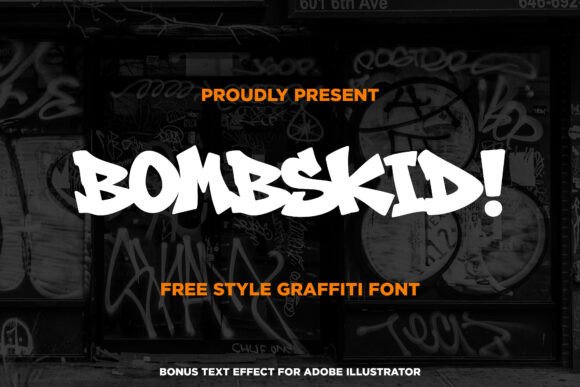
Bombskid positions itself as a freestyle graffiti typeface rooted in authentic street culture. The font draws inspiration from hand-painted tags, underground hip-hop visuals, and the raw energy found on urban walls and freight trains. Its chunky letterforms carry visible weight, while dynamic curves and slight irregularities mimic the organic flow of spray-can work. This combination gives designs an immediate sense of movement and attitude.
Unlike heavily stylized display fonts that lean toward cartoonish or overly polished aesthetics, Bombskid maintains a gritty, handcrafted quality. The letterforms feel like they were created quickly, with confidence, which mirrors how real graffiti artists develop their personal styles. Each character carries expressive personality without sacrificing legibility at appropriate sizes.
Understanding the Feature Set
Bombskid ships with uppercase and lowercase characters, numerals, punctuation marks, and stylistic alternates. The alternates deserve particular attention because they allow designers to swap out repeated letters, preventing the monotonous look that sometimes plagues script and display fonts. When setting a word like "STREET," you can cycle through different versions of the two E's to create a more natural, hand-drawn appearance.
This alternate system is particularly valuable for logo work and headlines where every letter sits under scrutiny. The font's character set covers standard Latin-based languages, which handles most English and Western European design needs adequately.
Where Bombskid Fits Naturally
Certain projects align particularly well with Bombskid's strengths. Consider these practical applications:
- Music industry graphics — Album covers, concert posters, and promotional materials for hip-hop, punk, and alternative genres benefit from the font's authentic street aesthetic.
- Streetwear branding — T-shirt designs, hoodie prints, and merchandise labels gain credibility with type that references actual street culture rather than corporate interpretations of it.
- Skate and action sports — Deck graphics, event flyers, and brand identities in skateboarding culture share visual DNA with graffiti traditions.
- Digital content — YouTube thumbnails, social media graphics, and gaming stream overlays often need bold, attention-grabbing type that reads quickly at small sizes.
- Physical installations — Stickers, murals, and event signage can leverage the font's large-scale presence effectively.
Comparing Bombskid Against Similar Options
The graffiti font category is crowded, and understanding where Bombskid sits within it requires some context. Many graffiti-inspired typefaces fall into distinct subcategories: wildstyle fonts that prioritize complex interlocking forms, bubble-letter fonts with rounded, inflated shapes, and handstyle fonts that capture the quick, gestural quality of tags.
Bombskid primarily inhabits the handstyle and chunky freestyle territory. Compared to wildstyle options, it offers significantly better legibility, especially at smaller sizes or for audiences unfamiliar with graffiti conventions. Against bubble-letter fonts, Bombskid trades approachable friendliness for edgier attitude and more dynamic movement.
When measured against other freestyle graffiti fonts, Bombskid distinguishes itself through its particular balance of weight and flow. Some alternatives lean too heavily toward chaotic illegibility, prioritizing style over function. Others become so tame they lose the authentic energy that made graffiti typography compelling in the first place. Bombskid navigates between these extremes with reasonable success.
Evaluating Tradeoffs
Every design tool involves compromises, and Bombskid is no exception. Its greatest strength — that bold, unapologetic street energy — becomes a limitation in contexts requiring subtlety or professionalism. Corporate communications, formal invitations, and luxury branding would feel incongruous with this typeface.
Extended body text is another clear mismatch. Bombskid functions as a display font, meaning it works for headlines, logos, and short impactful phrases. Attempting to set paragraphs with it would create visual fatigue and comprehension difficulties for readers.
Designers should also consider audience perception carefully. While graffiti aesthetics have gained mainstream acceptance through streetwear, music, and contemporary art, certain demographics still associate graffiti exclusively with vandalism. Context matters enormously. A streetwear brand targeting urban youth operates in a different cultural space than a financial services company, even if both want to appear "edgy."
Practical Decision Factors
When evaluating whether Bombskid suits your project, consider these questions honestly:
- Does your audience share cultural familiarity with graffiti aesthetics? If your target demographic appreciates street art and hip-hop culture, the font will resonate authentically. If they lack this reference point, the typeface may confuse rather than communicate.
- What is the competitive landscape for visual tone in your niche? Sometimes choosing a bold, unconventional typeface helps a brand stand out. Other times, it makes a project look like it's trying too hard to be different.
- How will the font perform across your required media? Test Bombskid at the specific sizes and in the specific contexts where it will actually appear. A font that looks striking on a large poster might become illegible as a website header at mobile screen sizes.
- Do you need the alternates and full character set? If your project involves repetitive text or multilingual requirements, verify that Bombskid covers your actual needs rather than assuming it does.
Working With Bombskid Effectively
Getting strong results from any graffiti font requires thoughtful implementation. Bombskid responds well to generous spacing and contrast. Pair it with clean sans-serif type for supporting text rather than competing display fonts. Let the headline do the heavy lifting while body copy remains comfortably readable.
Color choices amplify or dampen the font's impact significantly. High-contrast combinations — white on black, bright colors against dark backgrounds — honor the font's street-art origins. Muted, pastel palettes can work for certain applications but risk undermining the typeface's core personality.
Consider the cultural weight your design carries. Using Bombskid for a genuine hip-hop event feels appropriate. Using it ironically or superficially for a corporate "urban" campaign might alienate the very audience you hope to attract.
When to Look Elsewhere
Specific scenarios suggest exploring different approaches entirely. If you need a graffiti font with more complex interlocking and decorative elements, traditional wildstyle typefaces serve that purpose better. If legibility across diverse audiences is your primary concern, a bold sans-serif with subtle street influences might strike a safer balance.
For projects requiring extensive customization or true one-of-a-kind lettering, commissioning a hand-lettering artist or learning basic graffiti lettering principles yourself may yield more authentic results than any font can provide. Bombskid captures a particular style convincingly, but it cannot replicate the spontaneity and individuality of actual hand-drawn work.
Making an Informed Choice
Bombskid occupies a specific, well-defined niche within the graffiti font landscape. It delivers genuine street-art energy with enough legibility and versatility to function across multiple design contexts. The inclusion of alternates and a complete character set adds practical value beyond pure aesthetics.
For designers creating music-related graphics, streetwear branding, skate culture content, or bold digital media, Bombskid warrants serious consideration. Its strengths align clearly with these applications. For projects requiring subtlety, formality, or broad demographic appeal, other typographic directions will likely serve you better.
The most useful approach is testing Bombskid against your specific project requirements rather than evaluating it in isolation. Place it in your actual layouts, show it to members of your target audience, and assess whether it communicates what you intend. Fonts are tools, and the right tool depends entirely on the job at hand.