Against the Grain: Why This Charming Display Font Deserves a Second Look
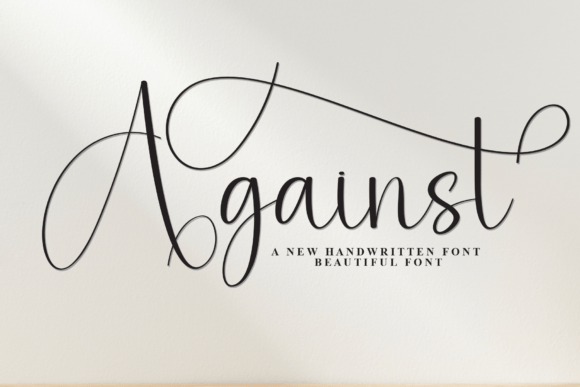
In the vast world of typography, it's easy to get lost. We scroll through endless libraries of fonts, often defaulting to the same reliable serifs or clean sans-serifs for every project. But what if your design calls for something with more personality, more warmth, and a touch of whimsy? This is where Against enters the conversation—a handcrafted display font that isn't just another pretty face in the crowd. It's a tool designed to inject charm, spontaneity, and a lighthearted character into your work, making it a standout choice for projects that aim to connect on a personal level.
At its core, Against is a typography gem crafted to encapsulate all things sweet and amiable. Its endearing appeal makes it a natural fit for creating mesmerizing wedding invitations, heartwarming greeting cards, and branding that feels approachable and fun. But its potential stretches far beyond that. Think of playful social media graphics, whimsical children's book titles, artisan product labels, or even a unique logo for a boutique bakery. The font's design encourages you to express yourself with a dash of fun, breaking away from the rigidity of more formal typefaces. However, like any specialized tool, using Against effectively requires more than just a quick download and a drag-and-drop. Many creators stumble into common pitfalls that undermine the font's very appeal.
The Pitfall of Overuse: When Charm Becomes Clutter
The most frequent mistake with a font like Against is using it for everything. Its delightful, hand-lettered style is its strength, but that same detail can become a weakness if overused. Imagine an entire wedding invitation suite where every line of text—from the couple's names to the venue address and the registry details—is set in Against. The visual noise becomes overwhelming. The charm that was meant to highlight key elements gets lost, and readability plummets. The unique character of the font becomes a monotonous pattern rather than a special accent.
The better approach is to treat Against as a headline or accent font. Its true power shines when it's used to draw attention to the most important pieces of information. For a wedding invite, set the couple's names and the "You're Invited" header in Against, then pair it with a clean, simple sans-serif or serif font for the details. This creates a beautiful hierarchy: the charming display font captures the eye and sets the mood, while the supporting font ensures all the necessary information is communicated clearly and elegantly. This principle applies universally—whether you're designing a logo, a poster, or a social media graphic, use Against for impact, not for bulk.
Neglecting Context and Audience
Another oversight is failing to match the font's personality with the project's tone and audience. Against is sweet and amiable, which is perfect for a baby shower invitation or a cozy café menu. It might not be the best choice, however, for a corporate finance report or a serious legal disclaimer. Using a whimsical font in a context that demands authority and precision can undermine your message's credibility. It's not that the font is "bad"; it's simply misapplied.
Before choosing Against, ask yourself: Who is this for? What emotion should it evoke? If the goal is to feel friendly, approachable, and joyful, it's an excellent candidate. If the goal is to convey stability, seriousness, or cutting-edge modernity, you should look elsewhere. For instance, a freelance graphic designer might use Against brilliantly in their personal portfolio to showcase creativity, but would wisely choose a different typeface for the body text of a client's corporate website. Understanding this nuance ensures your typography supports your communication goals rather than conflicting with them.
Technical Trials: Licensing, Pairing, and Readability
On a practical level, creators often trip up on the technical aspects. First and foremost is font licensing. Against is a handcrafted design, likely created by an independent type designer or foundry. Assuming it's free for commercial use because you found it on a font site is a common and costly mistake. Always, without exception, check the license. Is it free for personal use only? Does it require a one-time purchase for commercial projects? Are there limitations on the number of impressions or products? Violating a license can lead to legal trouble and unexpected expenses down the line. A quick check of the readme file or the download page details is a non-negotiable step.
Secondly, font pairing is an art. As mentioned, pairing Against with a neutral font is key. A poor pairing can clash visually. For example, pairing it with another highly decorative or script font would create visual chaos. The goal is contrast, not competition. Look for a companion font that has a simple, geometric, or classic structure. Test the pairing at various sizes to ensure they complement each other and maintain a clear visual hierarchy.
Finally, readability at small sizes is a critical test. Display fonts, with their intricate details and unique letterforms, are designed for headlines. Shrinking Against down to 10-point size for a long paragraph will almost certainly make it difficult to read. The charming loops and swashes can become muddy blobs. Always test your design at the intended output size. If it's for a printed card, print a test page. If it's for a website, view it on different devices. If readability suffers, it's a clear sign to reserve Against for larger, prominent text only.
Making an Informed Choice
So, how do you decide if Against is the right font for your project? Don't just glance at the preview. Download it (if a trial is available) and test it rigorously.
- Check the Character Set: Does it include all the letters, numbers, and symbols you need? Sometimes, charming hand-lettered fonts may have limited punctuation or lack special characters, which can be a problem for international projects.
- Test in Context: Create a mock-up of your actual project. Don't just type "The quick brown fox." Use real words and phrases from your design to see how the font flows and feels in its intended environment.
- Evaluate the Vibe: Print out a sample or look at it on screen for a while. Does the whimsy still feel fresh, or does it become grating? A font you love for five minutes might not work for a brand identity you'll use for five years.
In the end, Against is a wonderful tool for adding a specific kind of warmth and personality to your designs. It stands against the monotony of generic typography, offering a handcrafted alternative that can make your work feel genuinely personal and joyful. By avoiding the common mistakes of overuse, contextual mismatch, and technical oversight, you can harness its charm effectively. Use it to highlight, to delight, and to connect—letting its lighthearted character shine exactly where it's needed most, without overwhelming the message you need to convey.