Funny Tomato: A Practical Review of This Quirky Display Typeface
Understanding Funny Tomato's Design Philosophy
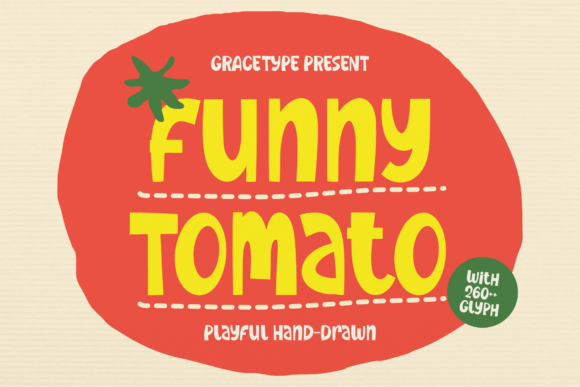
In the world of typography, display fonts serve a distinct purpose from their text-heavy counterparts. They are crafted for impact, personality, and immediate recognition at larger sizes. Funny Tomato enters this category as a deliberately playful option. It is not a typeface designed for body copy or formal documents. Instead, it positions itself as a tool for injecting specific energy into a project. Its design philosophy leans heavily into organic irregularity. The letterforms are intentionally asymmetrical, with varying stroke widths that mimic a casual, hand-drawn quality. This is not a flaw but a core feature, aiming to evoke a sense of authenticity and human touch. The bouncy baseline rhythm adds a dynamic, almost animated feel, preventing the text from appearing static or rigid. This combination creates a visual voice that is friendly, approachable, and slightly whimsical. It bridges a conceptual gap between the rustic charm of a farmer's market chalkboard sign and the vibrant, often irreverent, aesthetic of modern indie or children's branding.
Key Characteristics and Technical Specifications
Evaluating a typeface like Funny Tomato requires looking beyond its surface charm to its technical execution. The font family typically includes a single weight, which is heavy and bold. This heavy footprint is crucial for its intended use, ensuring it commands attention in headlines and logos. The character set generally covers standard Latin glyphs, punctuation, and numerals. While this suffices for most English-language projects, it may present limitations for multilingual applications requiring extended character support. The uneven widths and thick, rounded terminals are consistent throughout the glyph set, maintaining visual coherence even with its intentionally irregular shapes. The spacing (kerning) is pre-set to accommodate the bouncy rhythm, which works well at large sizes but, like many display fonts, may require manual adjustment in very specific logo or typographic lockup applications to achieve perfect balance. The font is commonly distributed in OTF or TTF formats, ensuring compatibility with major design software and operating systems.
Practical Applications and Audience Fit
The true value of Funny Tomato is best understood through its practical applications. It is not a universal tool, but for the right project, it can be exceptionally effective. Its strengths lie in contexts where approachability, fun, and a handmade feel are desired.
- Independent Organic Snack Packaging: This is a prime use case. For brands selling granola, artisanal chips, or small-batch preserves, Funny Tomato can convey the product's natural, unpretentious, and wholesome character directly on the label. It visually communicates "small-batch" and "made with care" without needing additional imagery.
- Children's Storybook Layouts and Educational Materials: The playful, slightly bouncy nature of the letterforms appeals directly to a younger audience. It can be used for chapter titles, activity book headings, or signage in a classroom setting to create an engaging and non-intimidating environment.
- Casual Restaurant and Café Menus: For eateries with a laid-back, family-friendly, or farm-to-table vibe, Funny Tomato can set the tone for the dining experience. It works well for headers on a menu board, featured dish names, or the café's logo, adding personality without sacrificing readability at a glance.
- Playful Social Media and Marketing Collateral: In digital spaces saturated with polished graphics, Funny Tomato can cut through the noise for brands targeting a younger demographic or promoting events like summer festivals, craft fairs, or family-oriented products. Its high-impact style is suited for Instagram stories, promotional flyers, and event posters.
The professionals who would benefit most from this font are graphic designers, brand identity specialists, packaging designers, and social media managers working within these niches. Small business owners in the food, children's, or lifestyle sectors may also find it a valuable asset for DIY marketing materials, provided they have a basic understanding of typographic hierarchy.
Strengths, Limitations, and Usability Considerations
Strengths: Funny Tomato's primary strength is its distinct personality. It is instantly recognizable and carries a strong emotional tone. The heavy weight ensures visibility, and the hand-drawn aesthetic provides a level of authenticity that can be difficult to achieve with standard fonts. It is a typeface that can single-handedly define the mood of a project.
Limitations: This strength is also its main limitation. Its strong personality means it is not suitable for formal, corporate, or minimalist design contexts. Using it for a law firm's website or a financial report would be inappropriate and jarring. Furthermore, while excellent for short bursts of text, its irregular shapes and bouncy rhythm can cause visual fatigue in longer sentences or paragraphs. It is fundamentally a headline font. As noted, the character set may not support all languages or specialized symbols, requiring verification before purchase for specific projects.
Usability and Workflow: For designers, Funny Tomato is straightforward to use within its intended scope. It installs like any other font and is accessed through the type tool in software like Adobe Illustrator, Photoshop, or InDesign. Its effectiveness is heavily dependent on context—pairing it with a clean, neutral sans-serif for body text is often necessary to maintain readability and create a balanced design system. The font's value is long-term for designers who consistently work within the playful, organic, or children's branding space; it becomes a reliable tool in their toolkit for a specific style of project.
Making an Informed Decision
Choosing to incorporate Funny Tomato into your project should be a deliberate decision based on audience and intent. It is an excellent fit if your goal is to communicate warmth, fun, and a handmade sensibility. If your brand or project identity aligns with organic markets, casual dining, children's products, or indie crafts, this typeface can be a powerful ally in visual storytelling.
However, if your design requires versatility, professionalism, or neutrality, or if you need to set large blocks of readable text, Funny Tomato would be the wrong choice. Its effectiveness is tied to its specificity. Before committing, consider creating mockups to see how the font interacts with your other design elements—imagery, color palette, and layout. Does it enhance the message, or does it overwhelm it? Does it speak the language of your target audience?
In conclusion, Funny Tomato is a well-executed display typeface that fulfills its specific design brief with clarity and charm. It is not trying to be everything to everyone, which is a mark of good design. For professionals and creators whose work lives in the realm of playful, organic, and whimsical communication, it offers a reliable and effective way to inject personality and joy into their designs. Its value lies not in universal application, but in its confident delivery of a particular, delightful aesthetic.