Madison: Capturing Timeless Elegance with an Art Deco Display Font
In the realm of graphic design, typography is rarely just about legibility; it is about evoking a specific emotion and transporting the viewer to a different time or mindset. For designers aiming to channel the opulence of the early 20th century, finding a typeface that feels authentic rather than kitschy can be a significant hurdle. This is where Madison enters the conversation. It is not merely a set of letters; it is a premium Art Deco ornamental display font designed to embody the geometric precision and glamour of the Roaring Twenties.
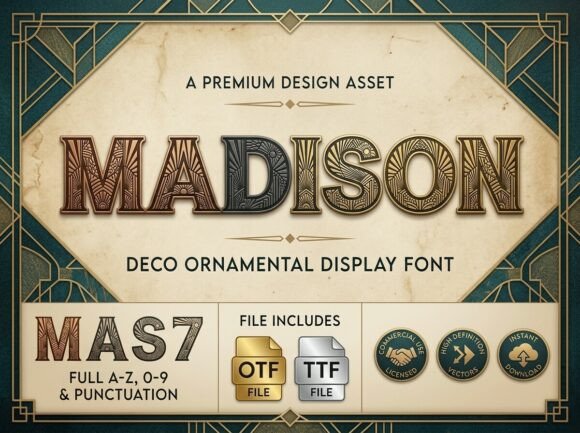
The primary challenge in vintage-inspired design is balancing historical accuracy with modern usability. Many retro fonts suffer from poor kerning or lack the intricate details required to sell the illusion of luxury. Madison addresses this by offering a geometric masterpiece in every character. It features intricate fan patterns and sunburst engravings that are synonymous with the Art Deco era. These are not subtle hints of the style; they are architectural statements that command attention.
The Aesthetic of Prestige and Heritage
When a designer selects a typeface for a luxury project, they are making a promise to the audience about the quality of the product inside. Madison carries a distinct architectural weight and a classic copper-and-gold aesthetic. This visual language speaks to heritage, stability, and high value. If you are working on a project where the goal is to communicate prestige, this font provides the visual shorthand necessary to achieve that immediate recognition.
Consider the specific needs of the spirits industry. The market is saturated with modern, minimalist designs. To stand out, a high-end spirit label needs to tell a story of craftsmanship and history. Using Madison for the logo or the batch number can instantly ground the product in a tradition of excellence. The intricate engravings mimic the look of expensive foil stamping or embossing, even when printed in standard ink, adding perceived value to the physical product.
Practical Applications and Implementation
While the aesthetic is rooted in the past, the applications for Madison are incredibly diverse in the modern market. Because it is an ornamental display font, it is best utilized for headlines, logos, and short bursts of impactful text rather than body copy. Here is how different professionals can implement this typeface to solve specific design challenges:
1. Hospitality and Branding
For vintage-style hotel branding or upscale speakeasy bars, the environment is everything. The signage, menus, and key cards must all contribute to the immersive experience. Madison is an ideal tool for jazz club posters and hotel collateral. Its bold, geometric structure ensures that titles are readable from a distance, while the ornamental details invite closer inspection. It helps create a cohesive brand identity that feels established and trustworthy.
2. Luxury Event Stationery
Weddings and anniversaries celebrating significant milestones often require a theme of elegance. Luxury anniversary stationery benefits greatly from the timeless nature of Art Deco design. By utilizing Madison for the couple's names or the event header, designers can create invitations that feel like keepsakes. The font’s heavy weight provides a beautiful contrast when paired with a lighter, sans-serif font for the details, creating a hierarchy that guides the eye naturally.
3. Editorial and Packaging Design
In editorial layouts, particularly those covering fashion, history, or luxury goods, drop caps and pull quotes need to make a statement. Madison serves as a strong anchor for a page layout. Similarly, in packaging design for gourmet foods or artisanal goods, the typography must reflect the care put into the product. The sunburst engravings of Madison suggest that the contents are crafted with attention to detail.
Tailoring the Approach for Different Users
Not every designer will use Madison in the same way, and understanding the nuance of the font allows for more tailored results.
- For the Brand Strategist: You might focus on the "Heritage" aspect. Use Madison to rebrand an old product that needs a facelift, restoring its connection to quality origins without looking outdated. The font acts as a bridge between the company's history and its future.
- For the Event Planner: You are likely focused on the "Glamour" aspect. You might use Madison in metallic foils—gold or copper—to mimic the physical luxury of the event itself. The font’s geometry pairs well with Art Deco venue architecture, such as mirrored ceilings or marble floors.
- For the Digital Designer: Web design requires careful handling of ornamental fonts. You might use Madison sparingly for hero section titles on landing pages. When used on a dark background with a light text color, the architectural weight of the font creates a striking, high-contrast focal point that reduces bounce rates by immediately establishing the site's premium status.
Overcoming Design Monotony
One of the greatest challenges in the digital age is visual fatigue. Audiences scroll past thousands of generic sans-serifs daily. Madison offers a necessary antidote to this monotony. By incorporating its intricate fan patterns, you introduce a level of artistic complexity that demands a pause from the viewer. It forces a slower, more appreciative consumption of the content, which is exactly what luxury marketing aims to achieve.
However, it is crucial to implement Madison with restraint. Because of its ornamental nature, it can overwhelm a layout if overused. The solution is to treat it as a jewel in the design—something that shines brightest when it has space to breathe. Pairing it with clean, neutral backgrounds and simple secondary typefaces allows the unique characteristics of Madison to take center stage without creating visual clutter.
Conclusion: A Tool for Timeless Communication
Ultimately, Madison is more than just a font; it is a design solution for anyone looking to inject a sense of history, wealth, and artistic integrity into their work. Whether you are designing a label for a small-batch bourbon, creating a poster for a local jazz festival, or laying out a magazine cover, this Art Deco display font provides the architectural weight and geometric beauty required to stand out. By understanding its roots in the Roaring Twenties and applying it thoughtfully to modern contexts, designers can ensure their projects communicate the prestige and luxury they deserve.