Dawood: Capturing the Fluid Movement of the Stage in Typography
In the world of design, typography is rarely just about legibility; it is about evoking a specific emotion and setting a narrative before the viewer has even read a single word. For professionals in the performing arts, particularly within the ballet and dance sectors, finding a typeface that conveys the discipline, artistry, and ethereal beauty of the stage can be a significant challenge. This is where Dawood enters the spotlight. More than just a decorative serif, Dawood is a typographic experience inspired by the fluidity of ballet, designed to bring the elegance of a live performance to static media.
The Challenge of Capturing Artistry in Branding
Artistic directors, dance studio owners, and boutique stationery designers often face a common hurdle: standard corporate fonts feel too rigid, while overly casual scripts lack the sophistication required for high-end cultural events. When branding a dance academy or designing a theater program, the visual identity must communicate grace, discipline, and movement. A generic serif font might convey tradition, but it fails to capture the kinetic energy of a prima ballerina. Conversely, a standard script font might look fluid but often lacks the structural integrity needed for professional branding. The goal is to find a balance—a typeface that feels alive yet remains grounded and readable.
Understanding the Anatomy of Dawood
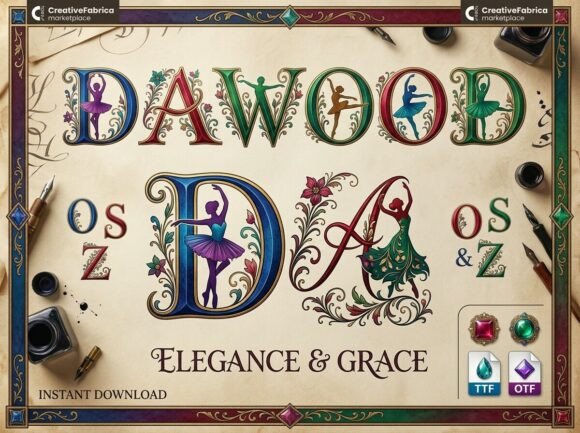
Dawood is not merely a set of letters; it is a collection of miniature artworks. The font is a stunning decorative serif, but its defining characteristic lies in its intricate detailing. Each character is meticulously adorned with silhouettes of prima ballerinas and elaborate floral vine work. This design choice transforms the alphabet into a visual metaphor for the stage. The "serif" elements provide the necessary structure and readability, while the ornamental flourishes mimic the swirl of a tutu or the extension of an arabesque.
For the discerning designer, understanding the composition of Dawood is key to using it effectively. The integration of the human form within the letterforms is subtle enough to maintain legibility at larger sizes, yet detailed enough to be admired up close. This makes it a premier choice for display typography where the text is meant to be the focal point of the artwork.
Practical Applications and Strategic Implementation
While Dawood is a work of art, it must be used strategically to solve real-world design problems. Its utility shines brightest in specific contexts where the aesthetic of the performing arts is paramount. Here is how different professionals can implement this font to elevate their projects:
1. Dance Academy Branding and Marketing
For a dance studio, the logo is the first impression of the curriculum. Using Dawood for the primary wordmark can instantly communicate that the academy values classical technique and artistic expression. Because the font includes floral and figurative elements, it reduces the need for excessive additional graphics. A designer can set the academy’s name in Dawood and pair it with a clean, sans-serif font for the contact details. This contrast ensures that the "brand personality" is established by the decorative font, while the "practical information" remains accessible via the secondary typeface.
Theater Programs and Playbills
Theater programs require a delicate balance of atmosphere and information hierarchy. Dawood is perfectly suited for the cover art and the headers of the cast biographies. It sets the mood immediately, transporting the audience member to the world of the performance before the curtain rises. When used for the title of the ballet (e.g., Swan Lake or Giselle), the font’s inherent movement aligns with the narrative of the show.
Boutique Stationery and Invitations
High-end event planners and stationery designers can leverage Dawood for gala invitations, recital announcements, and wedding stationery with a dance theme. In the world of print, texture and detail are king. The intricate vine work and ballerina silhouettes in Dawood are particularly effective on high-quality cotton paper or cardstock where embossing or foil stamping can highlight the detailed strokes of the letters.
Tailoring the Approach: Different Users, Different Needs
It is important to recognize that not every user will approach a decorative font like Dawood in the same way. The implementation must be tailored to the specific medium and the audience's expectations.
- The Digital Creator: For a social media manager promoting a dance recital, Dawood should be used sparingly—perhaps only for the headline of the poster. On screens, intricate details can sometimes become muddy if the resolution is low. Therefore, the digital creator should ensure the font is rendered at a large size to maintain the crispness of the floral vines and silhouettes.
- The Print Designer: A graphic designer working on a theater program has more freedom. They can use Dawood at varying sizes, perhaps using a heavily detailed drop cap to open a director's note. In print, the texture of the ink interacting with the paper can actually enhance the organic feel of the font's floral elements.
- The Brand Strategist: When building a long-term identity, the strategist must consider longevity. While Dawood is trend-aware, its roots are in classical art. It is best paired with timeless, neutral secondary fonts (like a clean Helvetica or a simple Garamond) to ensure the brand does not look dated in a few years.
Design Considerations and Best Practices
To maximize the impact of Dawood, designers should adhere to a few best practices regarding legibility and layout.
Spacing is Crucial: Because Dawood features ornamental details that extend beyond the standard bounding box of a letter, tracking (letter spacing) may need to be adjusted. Tight kerning might cause the ballerina silhouettes or vines of one letter to crash into the next, obscuring the design. Allowing for slightly looser tracking lets each character "breathe" and be appreciated individually.
Color and Contrast: This font thrives on contrast. A high-contrast color scheme—such as deep charcoal text on a cream background, or metallic gold on a deep navy—highlights the intricate details. Avoid busy background patterns that could compete with the complexity of the typeface. The goal is to let the typography be the star of the show.
Hierarchy Matters: Never use a decorative serif like Dawood for body text. The very features that make it beautiful—its complexity and ornamentation—make it difficult to read in long paragraphs. Use it for H1 headers, logos, and pull quotes. For the actual content of the program or website, switch to a highly readable serif or sans-serif font.
Conclusion
For anyone working within the cultural, artistic, or theatrical sectors, the choice of typography is a defining decision. Dawood offers a solution that goes beyond simple text; it offers a narrative. By incorporating the fluid movement of ballet and the organic beauty of floral design into a functional serif typeface, it allows designers to create branding and stationery that feels bespoke and deeply connected to the world of performance. Whether you are launching a new dance academy or curating a program for a classical theater, Dawood provides the artistic sophistication required to make a lasting impression.