Etarn: Integrating Bold Typography into Your Creative and Business Workflows
In the landscape of digital design and branding, typography is often the silent engine driving perception. While many professionals default to standard sans-serifs for safety, there are moments in a project lifecycle where standard is not enough. This is where specialized typefaces like Etarn come into play. Designed with the energy of graffiti art and the playful charm of cartoon typography, Etarn is not just a font; it is a strategic tool for capturing attention. However, utilizing a highly stylized font requires more than just a drag-and-drop approach. It requires a thoughtful integration into your planning, design execution, and final output stages to ensure the typography supports the project's goals rather than overwhelming them.
Understanding the Asset: What Etarn Brings to the Table
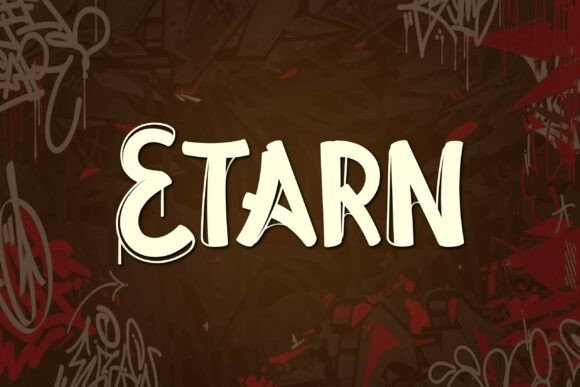
Before integrating any new asset into a workflow, it is essential to assess its technical specifications and aesthetic range. Etarn is a decorative font characterized by its dynamic and modern appearance. It is designed to deliver a unique visual style that resonates with bold attitudes, making it distinct from the geometric precision of Helvetica or the traditional serifs of Times New Roman.
Technically, Etarn features 96 carefully crafted glyphs and 95 characters. For the end-user, this means the font is optimized for headline and display usage rather than long-form body text. Understanding this limitation is the first step in planning. You would not use Etarn to write a blog post, but you would absolutely use it to create the header image for that post. Its design is built for high impact at larger sizes, making it a specialized tool in your creative arsenal rather than a generalist workhorse.
Strategic Placement in the Creative Process
When planning a project—whether it is a movie title, a game interface, or merchandise design—typography selection should happen during the conceptualization phase, not the final polish. This is where Etarn fits into a broader design process. If you are developing a brand identity for a youth-oriented product or an edgy startup, the font choice sets the tone immediately.
Consider the "discovery" phase of a project. You are gathering mood boards and defining the visual language. Etarn should be introduced here to test if its "playful charm" aligns with the client's or project's voice. Because it is inspired by cartoon aesthetics, it works exceptionally well for projects that require a sense of fun, rebellion, or high energy. By selecting Etarn early, you can build the color palette and supporting graphics around the font's inherent style, ensuring a cohesive visual narrative.
Practical Implementation: From Concept to Execution
Once the decision to use Etarn has been made, the focus shifts to implementation. This involves technical compatibility and design hierarchy. Because Etarn is a display font, its primary function is to act as the focal point. In a typical layout hierarchy, you might use a clean, neutral font for body copy and Etarn for the H1 headers or call-to-action buttons.
Workflow Integration for Designers
For graphic designers using tools like Adobe Photoshop, Illustrator, or Affinity Designer, integrating Etarn requires attention to spacing and kerning. Decorative fonts often have unique character shapes that may require manual adjustment to ensure legibility. A practical workflow tip is to convert the text to outlines (or rasterize it) once the content is finalized. This allows you to manipulate the vector points of the letters, perhaps extending a flourish or connecting a letterform to another graphic element in your composition.
Furthermore, consider the interaction between Etarn and your other assets. If you are designing a T-shirt, the font needs to work harmoniously with the illustration. If the illustration is busy and detailed, Etarn’s bold strokes might need to be simplified or placed in a solid color block to ensure readability. If the illustration is minimal, Etarn can take center stage with complex coloring or gradients applied directly to the text.
Specific Use Cases and Execution Strategies
The versatility of Etarn allows it to be applied across various industries, but the execution strategy changes depending on the medium. Here is how to approach implementation for specific outputs:
- Movie Titles and Poster Design: In the film industry, typography sets the genre. Etarn is ideal for comedies, animations, or action films targeting younger demographics. When using it for a movie title, pair it with high-contrast imagery. The workflow here involves testing the title against the "key art" (the main poster image) to ensure the font does not clash with the actors' faces or the background environment.
- Game Branding and UI: For game developers, Etarn can define the user interface (UI) personality. It works well for menu headers, level indicators, or splash screens. However, usability is key. Ensure that the font remains legible on various screen resolutions. A practical tip is to test Etarn on mobile devices early in the development cycle to verify that the "96 glyphs" render sharply on smaller pixels.
- Merchandise and T-Shirt Design: This is arguably Etarn’s strongest use case. The font’s graffiti inspiration appeals to streetwear and casual apparel. In a print-on-demand workflow, you must consider how the font translates to screen printing or DTG (Direct to Garment) printing. Thin lines can sometimes disappear in fabric weave; Etarn’s bold construction mitigates this risk, ensuring the design pops on cotton or polyester blends.
Optimizing for Quality Control and Consistency
When deploying a font like Etarn across multiple touchpoints, consistency becomes a priority. If you are building a brand, the way "Etarn" looks on a website header must match the energy of how it looks on a printed flyer. This requires a quality control step in your workflow.
Create a "Type Style Guide" specifically for Etarn. Document the exact point sizes, line heights, and colors you will use. For example, you might establish that Etarn is always used in All Caps for titles to maximize its impact, or that it should always be paired with a specific sans-serif font like Roboto for contrast. By standardizing these rules, you reduce decision fatigue during the execution phase and ensure that every piece of content produced feels unified.
Long-Term Use and Adaptability
Trends in typography shift, but styles inspired by urban art and cartoons tend to cycle back with frequency. Etarn’s design is modern enough to feel fresh today but rooted in a classic aesthetic of expression. For long-term use, consider how the font can be adapted for seasonal campaigns. You might use Etarn with bright, neon colors for a summer launch, and then switch to metallic textures or monochrome palettes for a winter collection, all while maintaining the core brand voice established by the typeface.
Additionally, think about the file management aspect. With 95 characters, the font file is lightweight and easy to manage within large project libraries. It does not bloat your design files, making it an efficient choice for agencies or freelancers handling multiple clients. Organizing your font library to keep display fonts like Etarn separate from your text fonts can streamline your asset retrieval process, saving valuable time during tight deadlines.
Conclusion: Etarn as a Functional Creative Tool
Ultimately, Etarn is more than just a stylistic choice; it is a functional tool designed for specific tasks. By understanding its strengths—its bold energy, its graffiti roots, and its cartoon charm—you can deploy it effectively to elevate your projects. Whether you are a game developer looking for a standout title screen, a marketer designing a high-conversion landing page, or a creator printing the next viral T-shirt, integrating Etarn into your workflow requires a balance of creativity and practical planning. When used correctly, it ensures your message is not just seen, but felt.