Outlaw Ridge: Mastering the Wild West Aesthetic Without the Design Dust-Ups
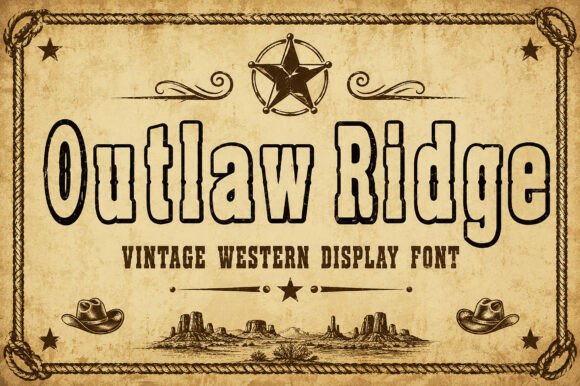
There is a timeless allure to the rugged, dusty aesthetic of the American frontier. Whether you are designing a logo for a craft brewery, creating merchandise for a country music festival, or laying out a cover for a gritty western novel, the typography you choose sets the stage. Outlaw Ridge has emerged as a go-to typeface for creatives seeking that authentic, vintage cowboy vibe. It isn’t just a font; it is a visual narrative featuring strong slab-style letterforms and intricate details reminiscent of old wanted posters and saloon signage.
However, wielding a display font with such a distinct personality requires a steady hand. Many beginners and even seasoned designers fall into common traps when working with rugged vintage type, leading to designs that look cluttered, illegible, or unintentionally comical. To truly capture the spirit of the frontier in your branding or merchandise, you need to understand how to harness the power of Outlaw Ridge effectively.
The Trap of Over-Styling: Why Less is More
One of the most frequent missteps when using a bold, western display font is the urge to layer on additional effects. Because Outlaw Ridge already features authentic western character details and a heavy, rustic presence, adding drop shadows, heavy bevels, or glowing neon effects often ruins the aesthetic. The font relies on its strong contrast and texture to convey age and ruggedness. When you pile on modern Photoshop styles, you create visual noise that obscures the design's integrity.
The Better Approach: Let the typeface do the heavy lifting. Instead of relying on software effects, focus on color and texture. Place your Outlaw Ridge text over a subtle paper texture or a high-contrast image of a desert landscape. Use colors that evoke the era—sepia, burnt sienna, charcoal, or cream. If you need depth, consider a subtle inner shadow or a simple texture overlay rather than a glossy 3D effect. This maintains the timeless frontier aesthetic the font was designed to express.
Context is King: Matching the Font to the Project
Not every project that requires a "vintage" look is suited for a heavy slab-serif. A common misunderstanding is treating Outlaw Ridge as a universal vintage font. While it is perfect for rodeo event posters, rustic ranch branding, and apparel, it might be too aggressive for a delicate artisan bakery logo or a high-end boutique. The font carries a specific "tough" energy; using it for a soft, romantic theme can create a disconnect with your audience.
How to Evaluate Fit: Before committing to Outlaw Ridge for a logo or packaging, ask yourself about the brand's voice. Is the brand trying to communicate toughness, tradition, durability, and heritage? If yes, this font is an excellent choice. If the brand is communicating elegance, modernity, or minimalism, you may need to look elsewhere. Always create a mood board first. If your mood board features leather, wood, metal, and open skies, Outlaw Ridge fits naturally.
The Legibility Test: Size and Spacing Matters
Display fonts are designed for impact, specifically for headlines and logos. They are rarely intended for body text. One of the biggest usability errors is trying to force a rugged typeface into long paragraphs. The intricate details that make Outlaw Ridge beautiful at 72pt can become visual mud at 12pt. Readers will struggle to decipher the text, leading to frustration and a loss of the message.
Practical Usage Rules:
- Headlines Only: Use Outlaw Ridge for your H1 tags, logos, and hero text. Pair it with a clean, highly legible serif or sans-serif font (like Roboto, Open Sans, or Lato) for your body copy.
- Kerning Adjustments: Vintage fonts often have default spacing that can look uneven. Take the time to manually adjust the kerning (space between letters), especially in logo design. Tightening the spacing slightly often makes the text feel more cohesive and professional.
- Test at Scale: Always view your design at 100% zoom. A design that looks great on a full-screen monitor might look like a blob when printed on a small label or viewed on a mobile device.
Overlooking the Details: Ligatures and Alternates
When creators download a premium typeface like Outlaw Ridge, they often treat it like a standard system font. They type out the words and move on. This is a missed opportunity. High-quality western fonts often come packed with OpenType features, including discretionary ligatures, stylistic alternates, and swashes. These features are what give professional logos that hand-lettered, custom feel.
Unlocking the Potential: Dig into your design software’s glyph panel (in Adobe Illustrator or Photoshop, go to Window > Type > Glyphs). You might find that the capital 'R' has a swash that crosses over the next letter, or that the 'T' and 'O' connect in a unique way. Utilizing these alternates prevents your design from looking "templated." It ensures that your branding feels unique, even if others are using the same font.
Color Theory and Texture in Western Branding
Choosing the right color palette is just as crucial as the font selection. A mistake often seen in western-themed design is the use of overly saturated, modern colors. Bright neon greens or electric blues clash with the vintage nature of Outlaw Ridge. The font demands a palette that feels grounded and earthy.
Creating the Atmosphere: To achieve a professional look, stick to a limited palette. Monochromatic schemes (using different shades of brown or grey) work exceptionally well. High-contrast pairings, such as cream text on a dark charcoal background, also evoke the feeling of old typography. Furthermore, don't forget the background. A flat, digital white background can make a vintage font look cheap. Adding a very subtle noise filter or a grunge texture overlay can tie the typography into the background, creating a unified piece of art.
Final Checklist Before You Launch
Before you finalize your project using Outlaw Ridge, run through this quick checklist to ensure quality and impact:
- Scalability: Does the logo remain legible when shrunk down to a social media profile picture or a favicon?
- Pairing: Is the body text easy to read, or is it competing with the headline?
- Authenticity: Does the color palette support the western theme, or does it look out of place?
- Features: Have you explored the stylistic alternates to customize the look?
- Application: Is the font being used for a purpose it was designed for (branding, posters, apparel) rather than a mismatched context?
Outlaw Ridge